 CS Equity AI
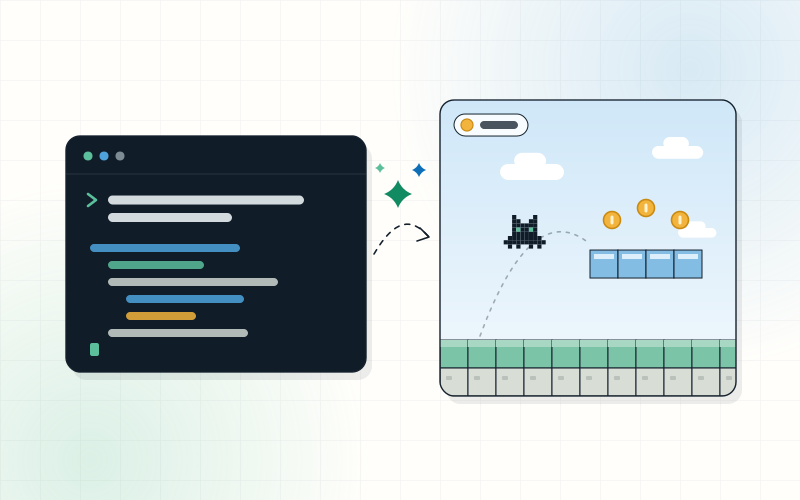
Spark curiosity by having fun making games. Vibe Coding Happy Hour is a two-hour workshop that takes 8–14 year olds from “I’ve never written code” to a game they built themselves, using the Gemini CLI. The session is hands-on and built around collaboration and play, with the AI helping students understand what they build.
The pilot ran in person at a Google office in Mountain View on Sunday, May 17, 2026, with volunteer engineer coaches working alongside kids in teams of about five. It was a deliberately small first run: enough to test the curriculum end to end, train a first group of coaches, and gather feedback from the students and their parents.
How the two hours ran
- Introduction (30 min): what AI is, how command-line tools work, and what “vibe coding” actually means
- Build (60 min): teams of about five, each with a coach, create their first game with the Gemini CLI using generation-then-comprehension: the AI writes the code, and the students question it
- Show & tell (20 min): every team demos what they made and playtests each other’s games
- Closing (10 min): where to take it next, and how to keep building at home
Wherever possible, each team had two coaches, one speaking Mandarin and one speaking English. Students practising English had a reason to use it, and students more comfortable in Mandarin never got stuck.
Who it is built for
- Kids aged 8–14, including bilingual students who speak some Mandarin
- Students in rural areas of Taiwan, and motivated K–12 students anywhere
- US primary and middle schoolers
What the pilot set out to prove
- That kids will use AI to ask questions and explore, rather than only asking it for answers
- That volunteer engineers can be turned into effective coaches in a single session
- That the curriculum, logistics, and process hold up in a real room with real eight-year-olds
- That the program produces artifacts schools, non-profits, and sponsors can actually evaluate before saying yes
What students walk away with
- A game they built themselves, often their first piece of software
- File system navigation and command-line basics
- An intuition for autonomous AI tools and their limits
- Technical communication skills from presenting and peer playtesting
Run it yourself
The complete curriculum is open source, including slides, coach guides, setup instructions and playable game examples. Anyone can deliver a Happy Hour with their own students and coaches.
Open-source curriculum
Everything needed to host a Vibe Coding Happy Hour: course project, coach materials, and setup instructions.
github.com/samlin-ai/vibe-coding-happy-hourPlayable examples
Games built during the course that run in the browser. It’s the quickest way to see what students make.
samlin-ai.github.io/vibe-coding-happy-hourWhere it goes next
Summer of Vibe Coding: Taiwan, summer 2026
Sessions run in person by local partner schools and non-profits, with teaching assistants on site: university students from the founder incubation program and volunteer engineers visiting Taiwan over the summer. Organizations that want to host a session can request one below.
CSEdWeek 2026: United States
The English-language version scales up in support of CSEdWeek, aimed at primary and middle schoolers in the US.
Bring a Happy Hour to your school
Tell us about your school or organization and preferred dates. We bring the coaches, curriculum, and materials. Teachers don’t need to prepare anything, and it’s free. Questions first? Email info@csequityai.org.
Hosting in Taiwan over the summer? Use the Summer of Vibe Coding request form instead.